
If you have read a paint blog before, you’ve probably seen talk of LRV. It can be a little confusing, so here is a quick and easy guide to what you should know about this paint metric.
LRV stands for Light Reflectance Value. It is a scale that measures how much light a paint color reflects.
The scale goes from 0 to 100.
0 means that the paint color absorbs all the light. It is pure black.
100 means that the paint color reflects all the light. It is pure white.
This post may contain affiliate links. If you have any questions, please see my disclaimer page.
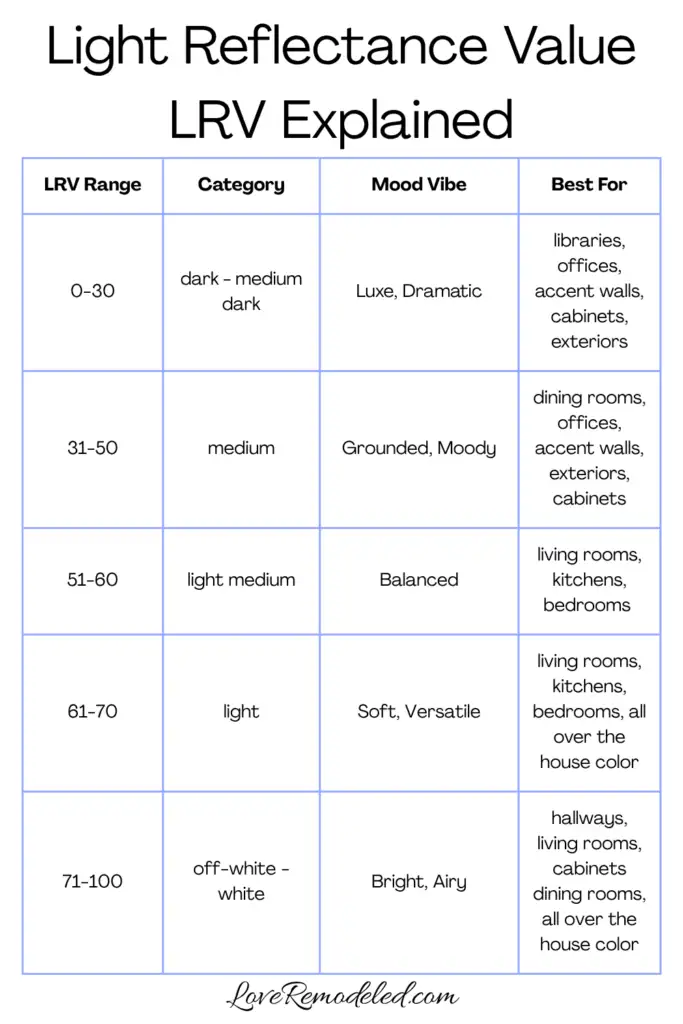
Broadly speaking, here is how the LRV range breaks down into actual colors.
Remember, this is a scale, so there aren’t clear distinctions between the different categories. For example, some colors in the lower 80s actually are more like off-whites.

In the 80s and up range, you find white paint colors.
Most paint colors in this category will have some undertones which will give them the color appearance that they have.
For example, High Reflective White has an LRV of 93, and almost no undertones. It will just look white. But also in this range is Creamy, with an LRV of 81. Creamy has a touch of 81, and almost drops into that off-white range.
The next picture shows Pure White, with an LRV of 84. It looks light and white, but not as stark as a white with an LRV in the upper 80s or low 90s would.
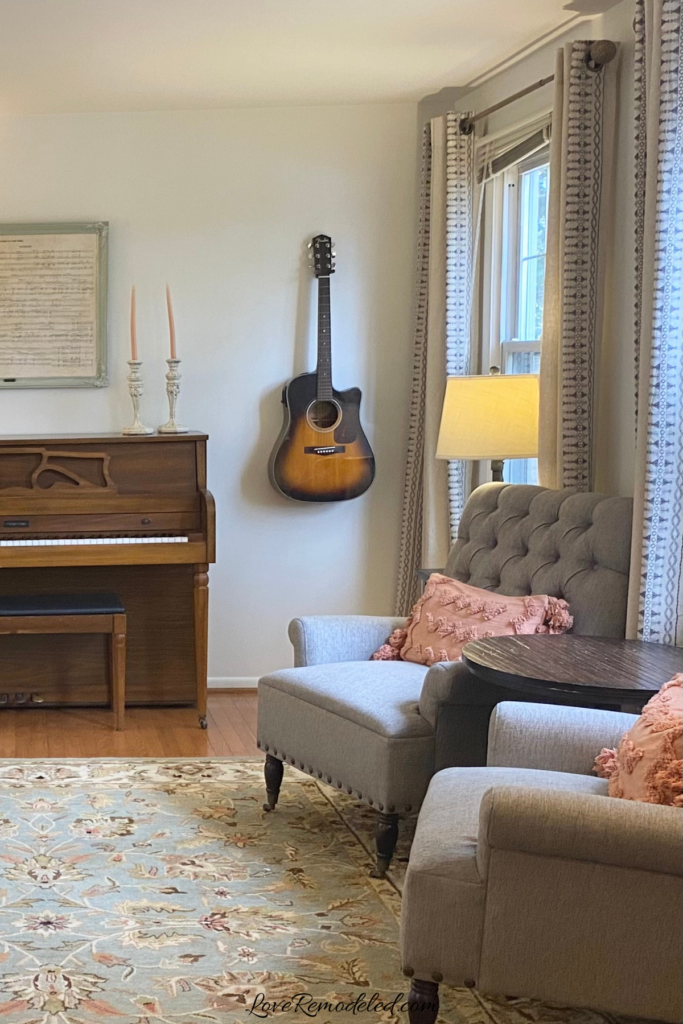
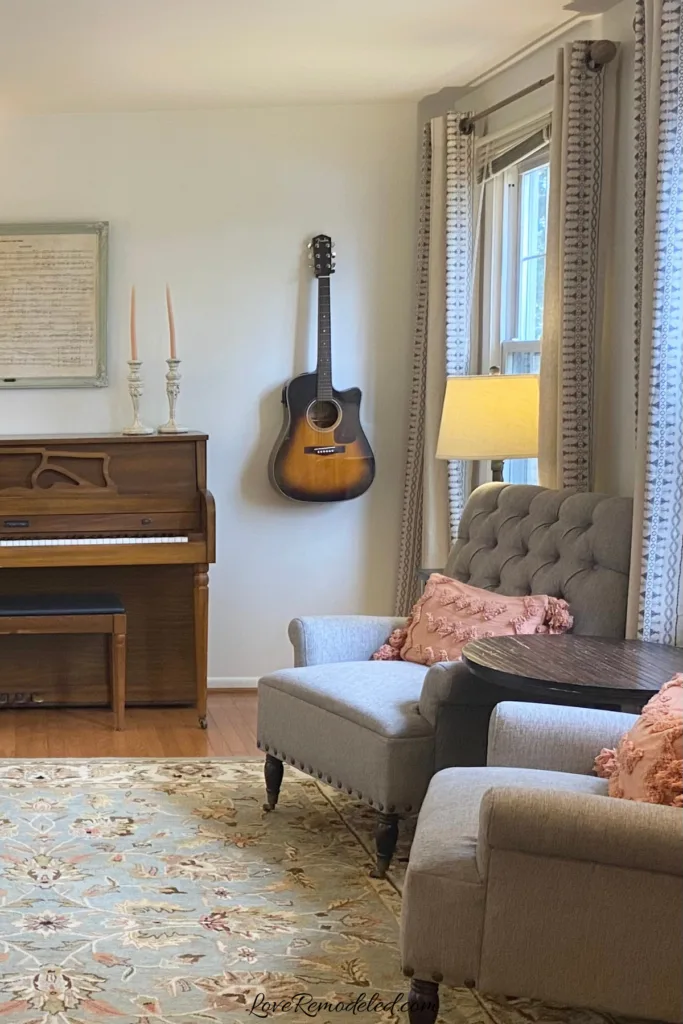
You can also have shades with a little more chroma in them, which will make them look pinkish, bluish, or yellowish, but they still count as whites.
Colors in the whites category are good for cabinets, walls, ceilings and trim.
As a note, with bright lighting, paint colors in the off-white and whites ranges can get washed out. If your room has a ton of light, you may want to consider an off-white.
Off-whites tend to be in the 70-80 range.
These shades are light and airy. They feel soft and muted, giving off a quiet elegance.
Here, you see Shoji White, with an LRV of 74. It shows a slight contrast with the trim color, which is Pure White.
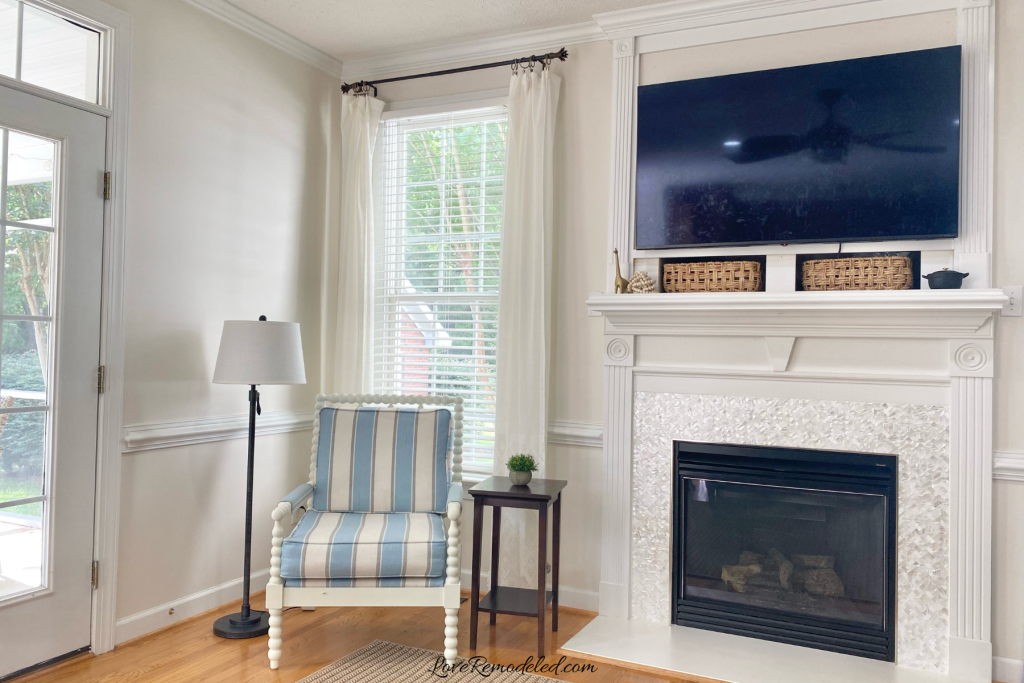
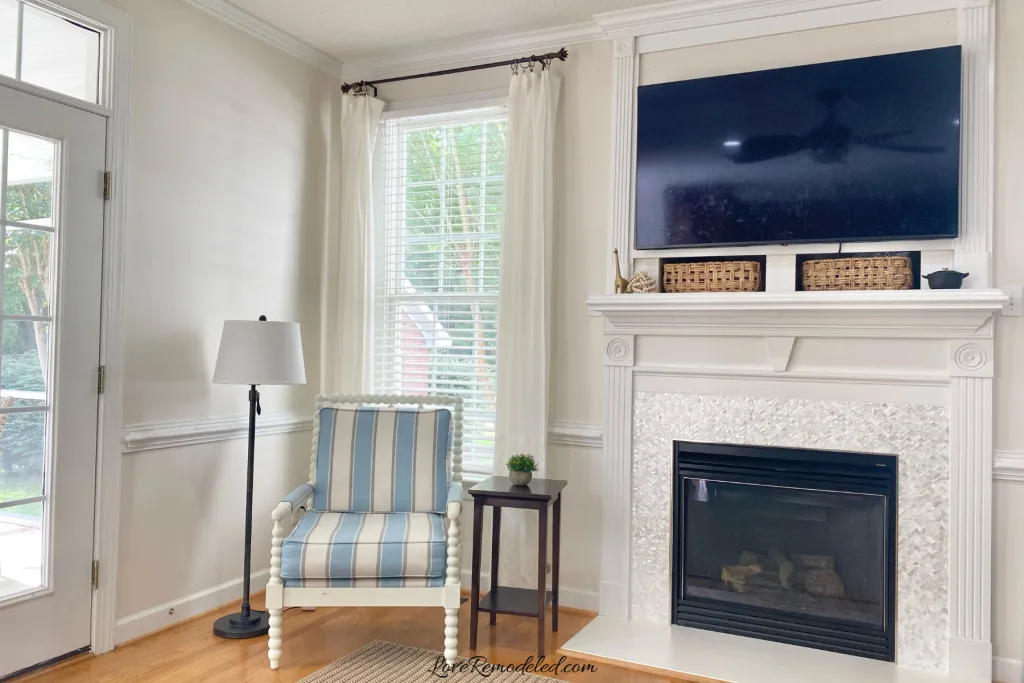
Off-whites work well in spaces in most spaces. They can be used on cabinets, walls, as a whole home color, or on home exteriors.
Remember though, a home exterior, they will look even lighter and may give your home a soft white look rather than an off-white.
Light paint colors fall in the 60-70 range.
This is the range of paint colors that work best for most people in most homes.
They don’t tend to wash out as much as lighter LRVs do in bright light, and have enough depth that they show up as a color on the wall.
Paint colors in the light range bounce some light around the room. They won’t make a space feel darker, but they also won’t be too bright.
In this next photo, you see Edgecomb Gray, with an LRV of 63. Notice how much light it reflects back into the space on the far wall. It takes on a shadier look on the near wall that doesn’t have direct sunlight on it.
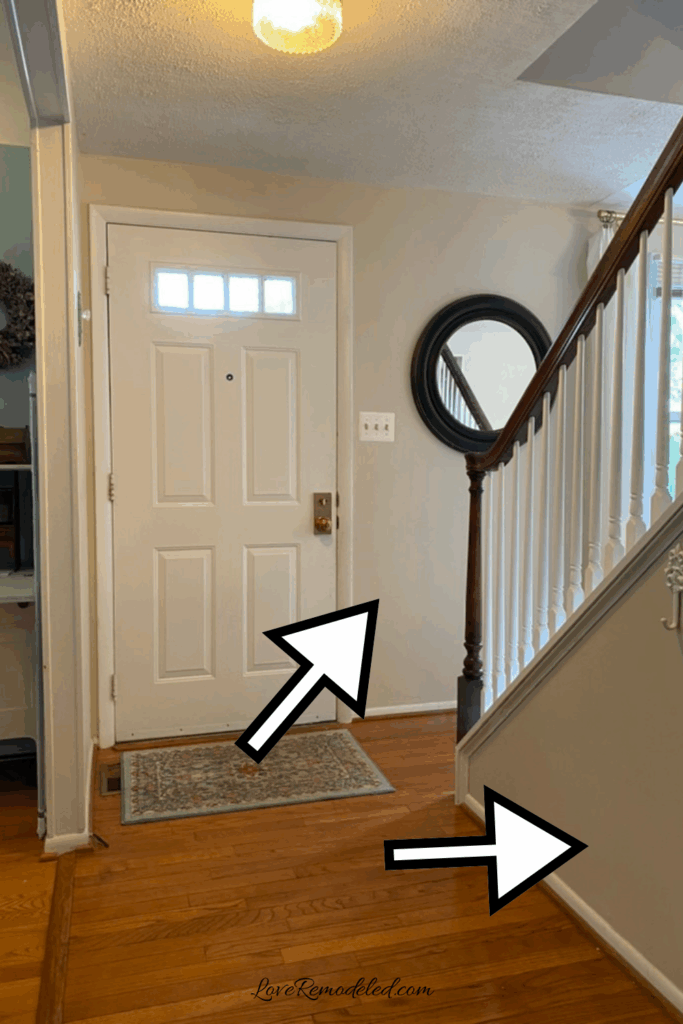

Light paint shades tend to work well in any room of the home, or as all over the home paint colors.
Off-whites also work on home exteriors, but, again, they will appear much lighter than they do inside due to the bright sunlight.
From 51-60, you find your light medium paint colors.
Paint colors in the light medium range reflect some light back into the room, but also absorb some.
In shadier spots of the house, they will show up with a little bit of depth, while in bright spots of the house, they can give a soft glow.
In this photo, you can see Silver Strand on several walls. On the wall on the right, you see how it looks very light in the bright sunlight. On the walls with less lighting on the left, you can see how it looks a good bit darker.

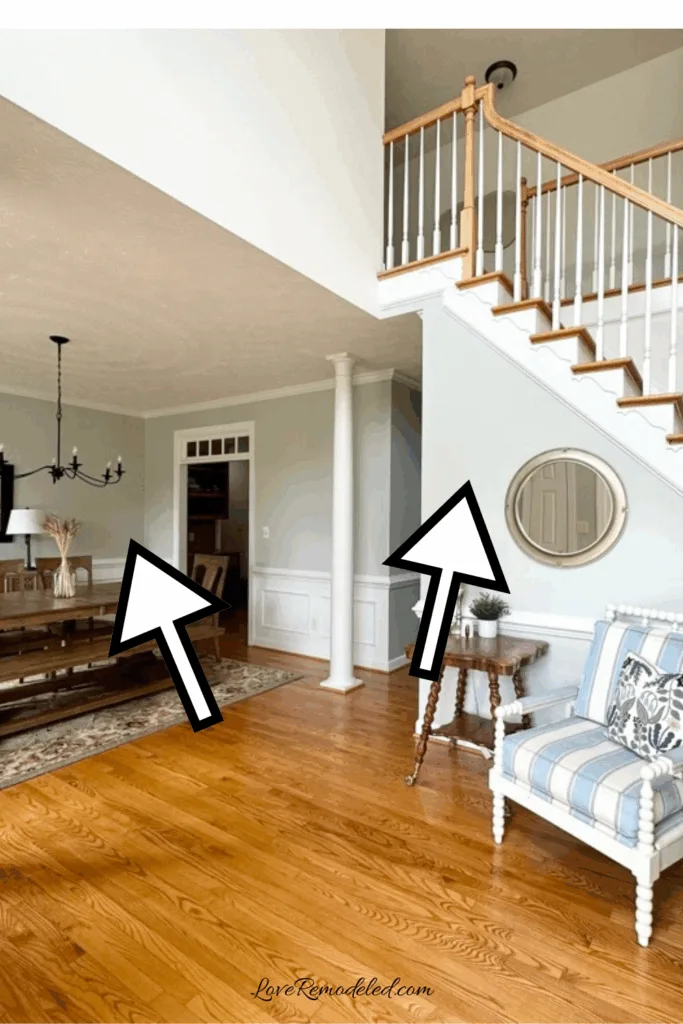
Light medium paint colors work well as all over the house shades if your home has a lot lighting. They aren’t my top choice for hallways, basements or places where you tend keep the shades drawn, as they may feel too dark.
LRVs from around 31-50 are medium depth.
From 30-50 you have your medium shades, which work well on cabinets, home exteriors, accent shades, or in a color drenching paint technique.
In the next photo, you can see Fawn Brindle lightened by 25%. The original LRV is 35, so this paint color has an LRV in the upper 30s or low 40s.

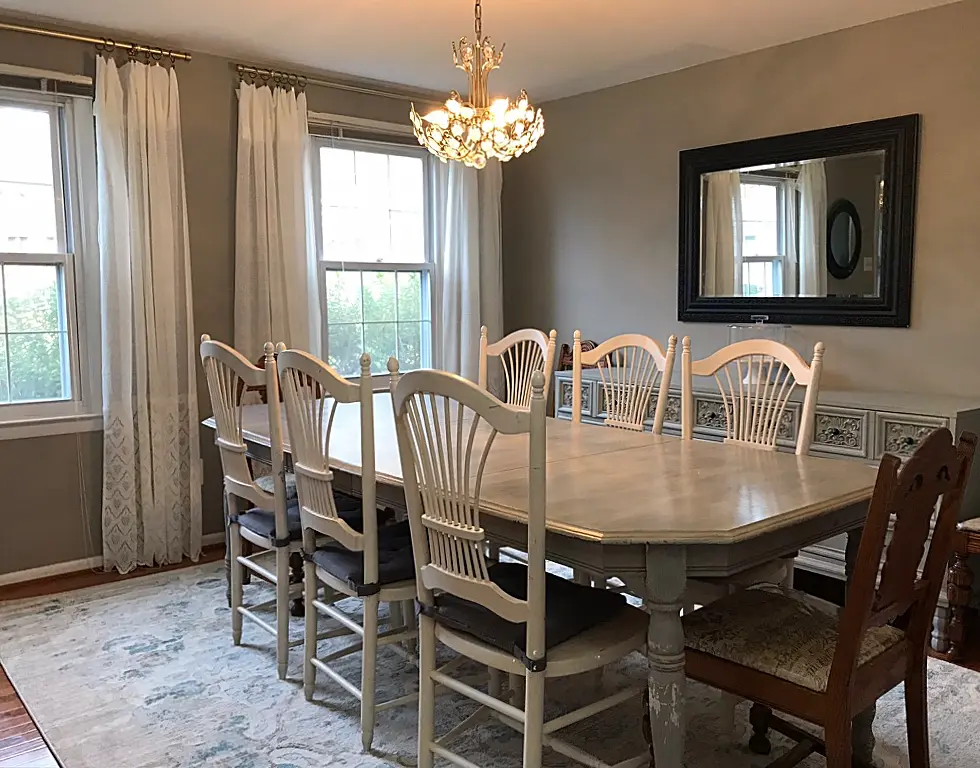
These colors provide a good contrast with shades in the off-white range and above, and will give some visual interest to a space.
But, they are pretty dark on walls, and require a lot of committment to the color to use in a whole room.
LRVs from 0 to 30 are dark to medium dark.
These dark paint colors bring true depth, contrast, and give your eye a place to rest.
They feel moody and can give a real luxe vibe when used well.
Colors from 10 to 30 are in the dark medium category. They help ground the space, but don’t look quite as dramatic as true dark shades do. The blue paint color in the picture below is this range.


Shades from 0 to 10 are very dark. In the picture above you see Urbane Bronze (LRV 8) on the wall behind the bookshelf. It looks very dark and saturated.
Dark paint colors work well on cabinets, home exteriors, as accent shades, or on trim.
Final Thoughts on LRV
It is important to remember that these aren’t hard and fast categories.
A shade with an LRV of 82 may really look like an off-white, rather than a white, and a color with an LRV of 55 may work really well as an all over the house paint color in the right home.
This is just meant to be a general guide to set you on the right path to picking a paint color that works for your intended use in your home.
While knowing the LRV of a paint color can be really helpful, the best way to know how light or dark a paint color will look in your home is to sample the paint color in your space, with your lighting.
Wondering How To Pick the Perfect Paint Color?
I have the best solution for you!
Samplize sells peel and stick paint samples in almost every paint color.
These no-mess, peel and stick sheets are made from real paint, so they will show you exactly what the paint color will look like.
Simply place them on your walls next to your trim, furnishings or fixed elements, and easily see which paint color works best in your space and with your lighting.
Then, peel the sheet off your wall and reapply it somewhere else if you like. You can try several different paint colors with no mess, no fuss and no cleaning paint brushes.
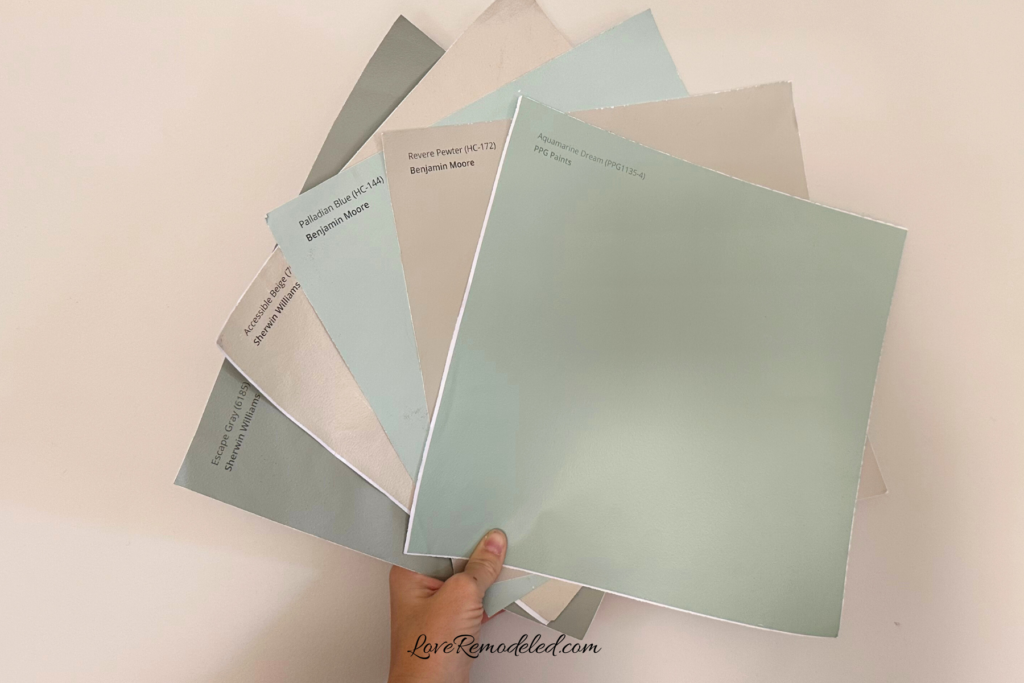
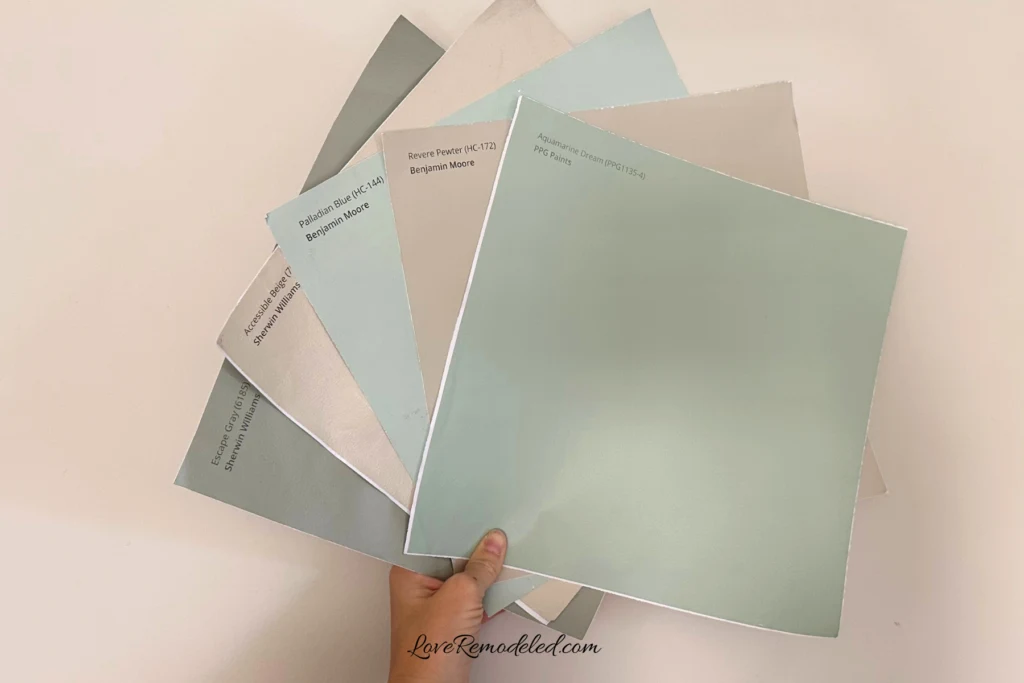
Oh, and you can have them in your home by tomorrow with OVERNIGHT shipping!
As a bonus, be sure to use the code LoveRemodeled10 at check out to get an extra 10% off! Samplize sheets are cheaper than a sample can of paint, and way less work.
They are the easiest (and fastest!) way to try a paint color in your home, with no hassle.